
Huldra and Photographer
Dive into the dark fantasy horror of Huldra and Photographer, a chilling tale by Maria Johnsen. Brought to life by Golden Way Media Films, directed and produced by Maria Johnsen herself.
Writer, producer, director: Maria Johnsen
Production: Golden Way Media Films
The mythical figure of the huldra has long been part of Scandinavian folklore, but the details of this supernatural being vary widely from country to country. Because these stories were passed down through oral traditions, each region developed its own version of the legend. This diversity makes the huldra a flexible mythological character that can be interpreted in many ways. In the film Huldra, filmmaker Maria Johnsen presents a unique interpretation of the creature, one that does not strictly follow the traditional descriptions found in Scandinavian folklore.
In traditional stories, the huldra is usually described as a beautiful woman who lives in forests and mountains. She appears human at first glance, but she has physical characteristics that reveal her supernatural nature. In Norwegian folklore, one of the most common descriptions is that the huldra has a cow’s tail. The tail is often hidden under her clothing and becomes visible only when someone notices something unusual about her appearance. This detail symbolizes the dual nature of the huldra: she appears human but belongs to the supernatural world.
In Swedish folklore, the huldra can have a different physical trait. Instead of a tail, she may have a hollow or tree-like cavity in her back. This hollow back is sometimes described as looking like a rotting tree trunk or an empty opening, suggesting her deep connection to nature and the forest. The idea reflects the belief that the huldra is part of the natural landscape rather than simply a mystical woman living within it. Other Scandinavian traditions also include variations of the story, sometimes giving the huldra different behaviors, appearances, or roles in folklore.
Because of these variations, it is important to understand that the huldra is not a single, fixed character across Scandinavia. Instead, she is a myth that has evolved differently depending on the culture, environment, and storytelling traditions of each region. Over time, the huldra has been portrayed in many ways: as a seductive spirit who lures men into the forest, as a mysterious guardian of nature, or even as a tragic supernatural being searching for connection with humans.
In Maria Johnsen’s film, the portrayal of the huldra moves away from strictly following one folkloric description. Her version of the creature focuses more on the mysterious and symbolic aspects of the myth rather than emphasizing specific physical traits like the cow tail or the hollow back. This artistic choice allows the character to feel more universal and less tied to one particular national legend.
Johnsen’s interpretation emphasizes atmosphere, psychology, and the emotional presence of the huldra. Instead of presenting the creature as a traditional folkloric figure with clearly defined characteristics, the film explores the idea of the huldra as a mysterious force connected to nature and human imagination. This approach reflects how myths often change when they are adapted into modern storytelling formats such as film.
By reinterpreting the myth, Johnsen creates a version of the huldra that reflects her own artistic vision. Her portrayal does not attempt to claim that the creature looks the same in every Scandinavian country. Instead, the film acknowledges that people in different regions have different views and descriptions of the mythical creature. This perspective respects the diversity of folklore traditions while allowing the story to develop its own identity within cinema.
In this way, Maria Johnsen’s Huldra stands as a creative reinterpretation of a traditional Scandinavian myth. Rather than reproducing one specific folkloric version, the film highlights the evolving nature of mythology and demonstrates how ancient legends can be reshaped through modern filmmaking.
Huldra and Photographer: A Dark Fantasy That Brings Nordic Legends to Life
Huldra and Photographer: When Folklore Meets Thrilling Storytelling
“Huldra and Photographer” is pure storytelling, a dark, thrilling journey into myth and imagination. This isn’t about facts; it’s about experiencing the legend of the Huldra through fantasy and horror. The film’s power lies in its ability to captivate, unsettle, and transport audiences into a world where myth comes alive.

Huldra and Photographer is fantasy, not fact! It’s a story and stories can be told in any way the storyteller chooses.

Streaming on Amazon UK

Streaming on Amazon Japan

Streaming on Amazon Japan
フルドラと写真家

Auf Amazon Deutschland
Behind the Scenes Photos
Behind the scenes with Maria Johnsen, Emil Bratt Børsting, Andre Lund, Carina Velva and Tor-Inge Langberg.


Mr. Jenkins the Squirrel at Jonsvatnet in Trondheim was also one of our performers.
Cast: Tor-Inge Langberg and Carina Velva
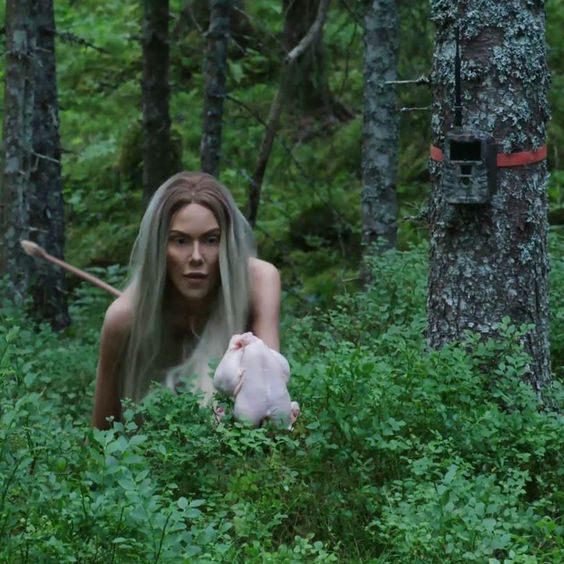

Location: Jonsvatnet in Trondheim, Norway.
Location scouting with Maria Johnsen the director and Emil Bratt Børsting


Disclaimer: All materials on this website, including social media and video channels, are copyrighted and owned by Golden Way Media Films. Copying or reproducing any content without prior permission is strictly prohibited.