

Filming Nordic Myths through haunting landscapes, where forests, stone, and mist reveal forgotten legends and hidden ancient presence. In the Nordic wild, landscape is not merely scenery, it is memory.
Mountains rise like ancient guardians. Forests breathe with a presence older than language. Fjords carve through the earth like wounds left by time itself. To the casual eye, these are natural wonders. But through the lens of a camera, especially a cinematic one, they become something else: living archives of myth, etched with the whispers of forgotten sagas.
This is where landscape photography evolves into filmmaking, and where filmmaking becomes an act of myth excavation.
The Land as Storyteller
Nordic folklore has always been inseparable from nature. Myths did not happen in the landscape, they happened because of it. Stones held memory. Forests hid beings unseen. Mountains were not backdrops but thresholds between worlds.
Filmmaking allows us to revive this worldview.
Unlike traditional documentary, which explains and categorizes, a cinematic approach treats the environment as a narrative subject. The camera does not simply record a mountain; it observes it as if it were a witness. A forest is framed not as geography, but as a space that might be watching back.
Through slow pacing, lingering shots, and attention to texture, bark, moss, mist, stone, the landscape begins to feel less like location and more like presence. The land becomes a storyteller whose language is visual rather than verbal.
Cinema as a Tool for Decoding the Earth
Photography captures a moment. Film captures duration, and in duration, we begin to sense life.
A rock face filmed in stillness, with only the sound of wind, feels ancient and sentient. A slow push-in toward weathered stone can resemble the act of reading a text. Cracks in granite echo the angular forms of runes. Tree roots resemble veins or fingers. Mountain ridges mirror carved symbols.
Through cinematic techniques, macro detail shots, gradual camera movement, and rhythmic editing, the filmmaker becomes an archaeologist of perception. The lens does not invent myth; it reveals how the natural world already resembles the symbolic language humans once used to understand it.
This is not fantasy layered onto reality. It is the rediscovery of a way of seeing that modern life has forgotten.
Huldra and the Art of Suggestion
One of the most powerful aspects of filmmaking in this context is the ability to suggest presence without showing it.

In Nordic folklore, the Huldra, a forest spirit, both alluring and dangerous, is part of the unseen world woven into the wilderness. In cinema, such beings need not appear as creatures or visual effects. Instead, their existence is conveyed through atmosphere.
A camera lingers on a dark tree line just a moment too long. Focus shifts subtly, as if something has moved. Wind rises suddenly, though nothing visible stirs. A branch snaps in the distance. The forest feels inhabited.
Sound design plays a crucial role: faint whispers blended into wind, low droning tones beneath mountain shots, distant echoes that resemble breath or voice. These elements transform landscape into habitat, not just of animals, but of mythic presence.
The result is not spectacle, but sensation. The viewer begins to feel what ancient people may have felt: that the land is alive, aware, and shared with other beings.
From Landscape to Living Archive
The concept of “runes etched in the land” is not merely poetic, it becomes a visual strategy. Editing can connect patterns in nature with human-made symbols: the jagged line of a cliff cut with the shape of a rune, the twist of roots mirrored in carved wood, the flow of a river echoing ancient pathways.
Through these visual parallels, filmmaking suggests that mythology did not emerge separate from nature, it emerged from observing it. The land shaped the symbols. The symbols shaped the stories.
In this way, the film becomes less about teaching folklore and more about restoring perception. It invites viewers to see landscapes not as empty spaces, but as cultural and spiritual texts written over millennia.
The Mythic Journey Structure
A cinematic exploration of Nordic myth through landscape often follows a subtle narrative arc:
First, the land is introduced in stillness, vast, quiet, seemingly indifferent. The viewer learns to slow down and observe.
Next, details emerge. Textures, patterns, and forms begin to resemble signs and carvings. The environment shifts from passive to expressive.
Finally, presence is felt. The audience no longer sees “just a forest” or “just a mountain.” Shadows suggest watchers. Mist feels like movement. Silence becomes charged. The myth has not been shown, it has been perceived.
The climax is not the appearance of a creature, but a transformation in the viewer’s way of seeing.
Why Film, Not Just Photography?
Photography can reveal beauty. Film can reveal presence.
Motion, sound, and time allow landscapes to breathe. A static image of fog is atmospheric; moving fog, accompanied by distant wind, feels like something arriving. Duration creates tension, awareness, and emotional resonance.
Film also mirrors the oral tradition of myths. Stories unfold slowly. Meaning accumulates. Atmosphere matters as much as plot. Through rhythm and audiovisual immersion, cinema reconnects us with the ancient mode of experiencing the world, not as observers standing apart, but as participants inside a living environment.
Cinema as Myth Excavation
At its core, this approach to filmmaking is not about fantasy or historical reenactment. It is about reawakening a forgotten relationship between humans and landscape.
The mountains, forests, and fjords of the North are not relics of myth. They are its origin. Through cinematic language, framing, movement, sound, and time, the filmmaker becomes a translator between modern perception and ancient awareness.
The result is a visual essay where the earth itself speaks. Where runes are found not only on stone, but in shadow and contour. Where Huldra does not need to appear to be felt.
In such films, the camera does more than capture images.
It listens.
It reads.
It remembers.
And in doing so, it helps us remember too.
The Battle of Hulders Trilogy
“The Enchanted Pursuit” (Book 1)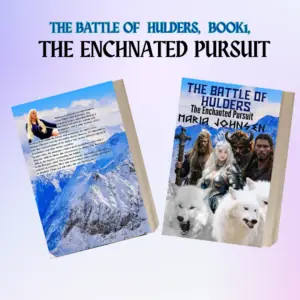 Step into a world where magic thrives, and love defies realms! Follow a passionate Huldra princess and a daring elven prince on a journey of forbidden romance and destiny. Grab your copy and let adventure, mystery, and love sweep you away!
The Revelation of Destiny” (Book 2)
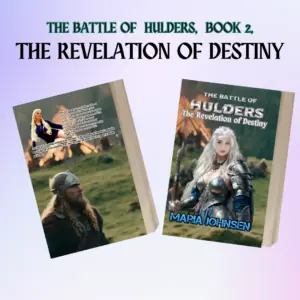 Join Eowena and Brandor as they face trials that test their love and courage in an epic battle against fate. Will their love survive, or will dark forces tear them apart? Find out in this gripping sequel full of suspense and heart-pounding action!
“The Convergence of Destinies” (Book 3)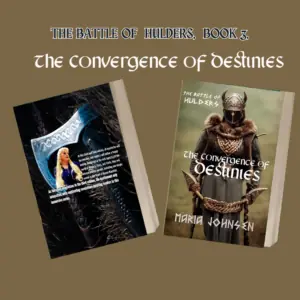 Queen Maethild has fought for her kingdom, but now a darker threat looms. With a hidden secret that could change everything, this fearless warrior’s journey will decide the fate of her realm. Discover the thrilling conclusion where secrets unfold and destinies collide!
This is the continuance of my film called “Huldra and Photographer” Which I made back in 2019. Currently I have a feature film in pre-production called “Elf and Huldra” inspired by this story.